Lesson 10: The Principle of Roasting
Lesson 10
Supercharging Flavour with Caramelisation
Oven- and pan-roasting are two of the most powerful ways to transform vegetables and unlock incredible depth of flavour. Through browning reactions — chiefly caramelisation (the browning of natural sugars) and the Maillard reaction (a reaction between amino acids and reducing sugars) — simple ingredients develop rich, toasty, and complex notes that make plant-forward meals deeply satisfying.
In this lesson, Jens shows you how to master these principles so your vegetables truly shine. Once you understand how caramelisation works — and how to give your ingredients the perfect balance of heat, oil, and time — you’ll never look at vegetables the same way again. Even roasting just one or two elements in a meal can completely transform the overall flavour and texture, bringing warmth, contrast, and that irresistible roasted character to the plate.
You’ll learn exactly how to get roasting just right — from oven temperature and tray space to when to switch to a pan for direct caramelisation — so you can confidently build bold, roasted flavour into your creative cooking toolkit. Roasting also lays the foundation for nutritionally balanced, complete meals, a concept we’ll revisit in the Meal Matrix lesson.
In this cook-along, we’ll create a Moroccan-inspired warm salad featuring:
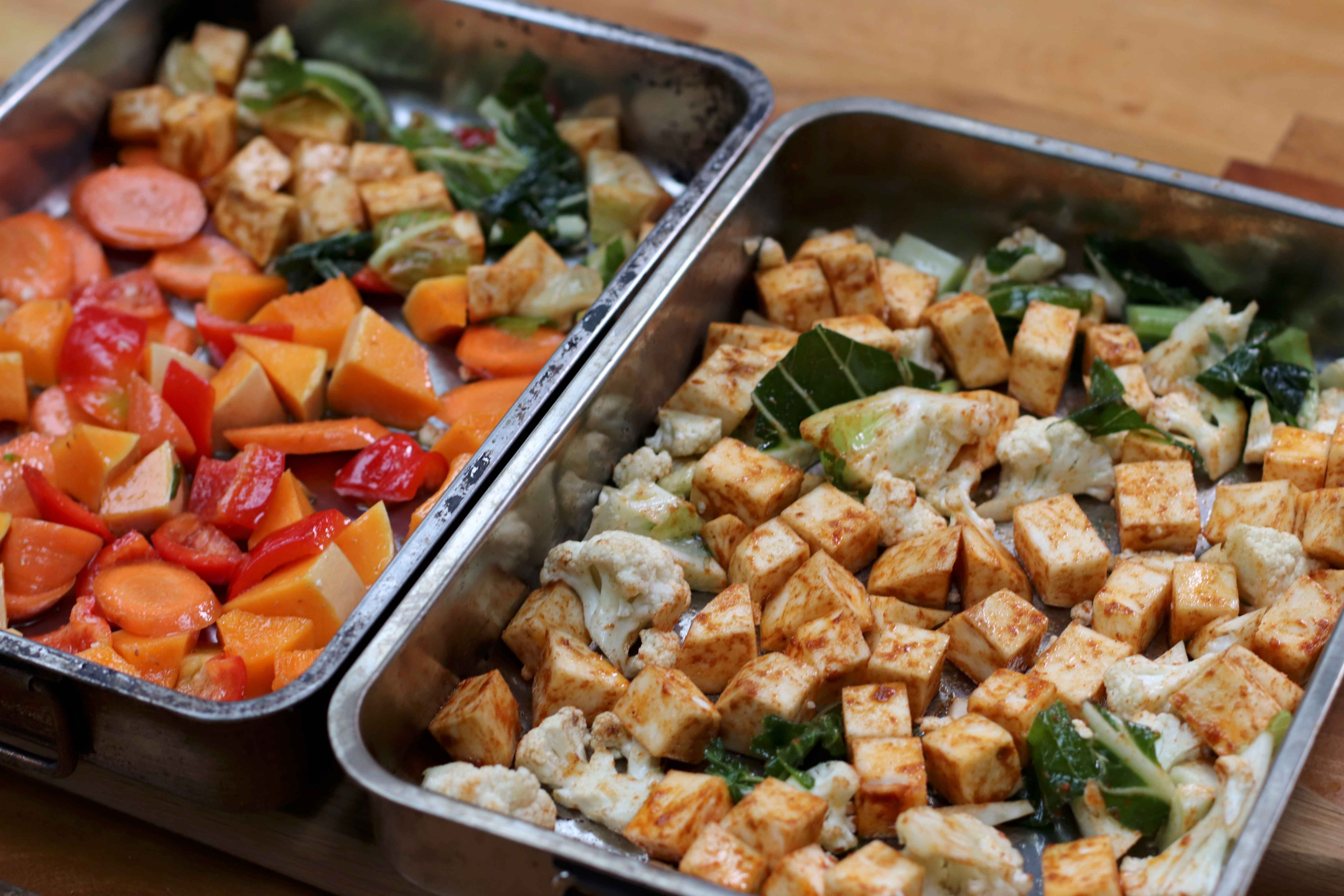
- Oven-roasted celeriac, butternut squash, turnips, red pepper, and red onion — caramelised to perfection
- Pan-roasted cauliflower for golden edges and nutty flavour
- Briny olives for a savoury hit
- Fresh baby spinach for colour and balance
- Crumbled feta to finish, adding creamy saltiness
Everything comes together with a citrus and ginger tahini dressing, served over whole grain couscous — a dish that’s vibrant, balanced, and bursting with roasted depth.
By the end, you’ll understand exactly how to harness the power of caramelisation to create richly flavoured, deeply satisfying plant-forward meals — and make vegetables the star of your plate.